Supervisors Vote Tuesday on Resolution Against Detention Facilities on Unincorporated Land
Item 8D asks the board to find that detention use of additional unincorporated parcels does not qualify as a beneficial public use of the county’s land and water. Staff brought back a resolution, not the urgency ordinance Supervisor Joelle Gallagher asked for in August, after concluding an ordinance would be harder to defend.
NAPA: The Napa County Board of Supervisors will decide Tuesday whether the county goes on record against new or expanded detention facilities in its unincorporated area. Item 8D on the agenda for the Nov. 17 meeting asks the board to adopt a resolution built on findings about groundwater, farmland, housing and fire risk, closing with a formal finding that detention use of additional unincorporated parcels is not a beneficial public use.
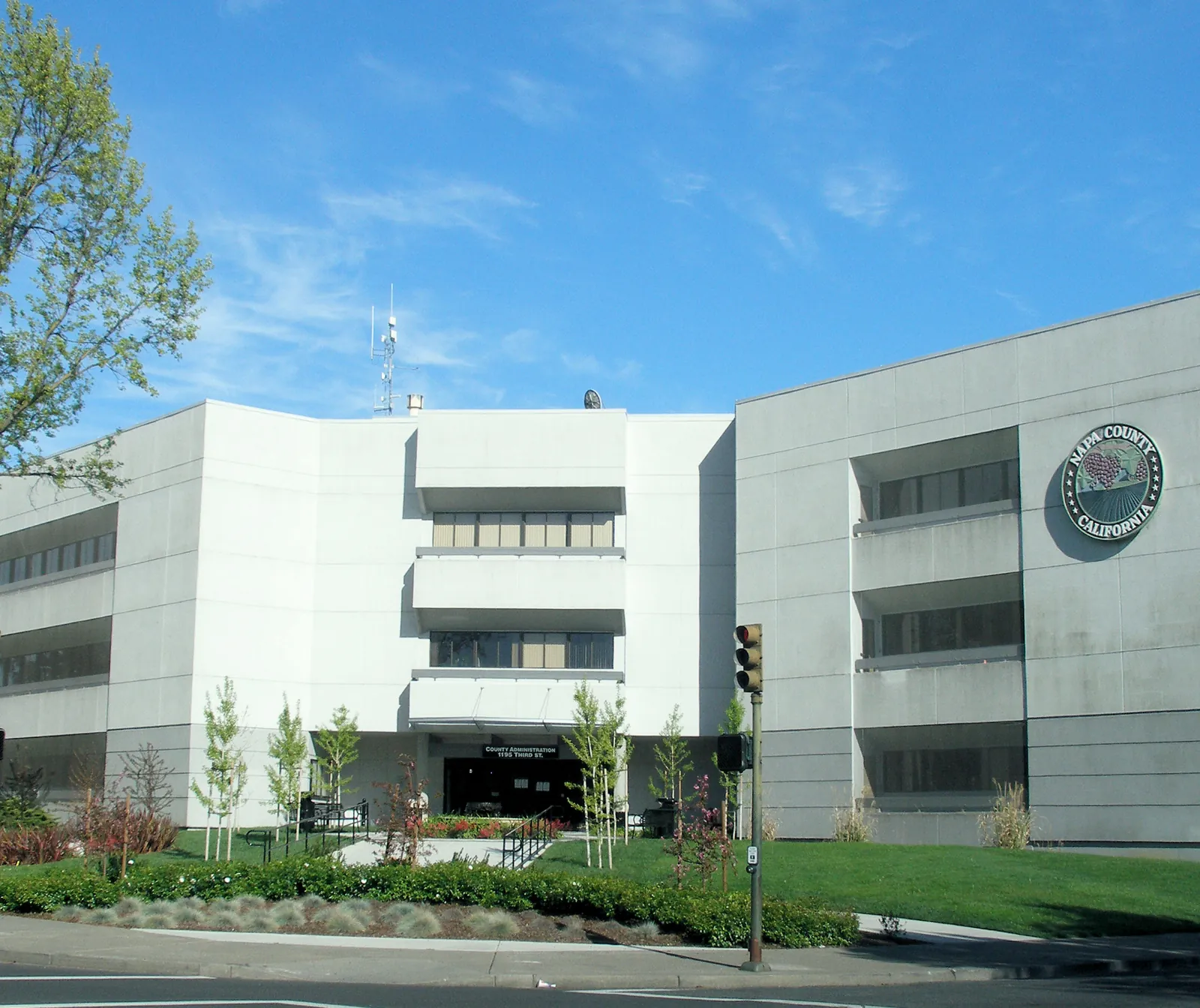
The meeting opens at 9 a.m. in the Board of Supervisors Chambers at 1195 Third St., third floor. The agenda and the staff report both state the item carries no fiscal impact.
A resolution where an ordinance was requested
The item traces to the board’s Aug. 25 meeting, where Supervisor Joelle Gallagher asked staff to return with an interim urgency ordinance imposing a temporary moratorium on new or expanded detention and correctional facilities anywhere in the unincorporated county. That history is set out in the staff report for File 26-1767, submitted from County Executive Officer Ryan J. Alsop’s office and written by Andrew M. Mize, a senior legislative and policy advocate.
Staff came back with a resolution instead, and the report gives two reasons. First, staff judged the legal defensibility of an urgency ordinance to be presently lower than would be preferable. Second, the county code is written to permit uses rather than prohibit them, and staff concluded that singling out one use for a ban would create an undesirable precedent in that code. A detention facility, staff added, could arguably meet the code’s criteria for a “quasi-public use.”
The resolution is staff’s answer to that problem. Rather than prohibiting the use, it assembles a record from the board’s existing land use policies and finds that detention use of more unincorporated land runs against them. The staff report says that approach addresses the core concerns behind Gallagher’s referral and lays effective and defensible groundwork for how the county applies its quasi-public use rules to detention and correctional facilities.
The findings: farmland, water, housing and fire
The draft resolution’s findings begin with agriculture. About 86,100 acres of Napa County land are preserved under the Williamson Act across 965 parcels, and the document describes preservation of agricultural and undeveloped land as among the county’s highest priorities, with longstanding policies against converting that land or letting non-agricultural uses encroach on it.
Water takes the largest share of the findings. The Napa Valley groundwater subbasin is categorized as high priority by the state Department of Water Resources, the county’s groundwater sustainability plan was approved in January 2023, and state law requires the county to bring pumping and recharge into balance. The resolution finds that putting additional unincorporated parcels to detention use is inconsistent with those obligations. Housing follows the same logic: the county’s state housing allocations require it to preserve enough serviced land to meet them. And the county’s airport land use compatibility plan, adopted in December 2024, already designates penal institutions as incompatible in most zones around Parrett Field in Angwin and Napa County Airport.
Fire is the last strand. Fifty-seven percent of Napa County has burned since 2014, the resolution states, naming the Atlas, Nuns and Tubbs fires in 2017 and the Glass and LNU Lightning Complex fires in 2020, and it finds that added rural development can strain the emergency services that respond. The findings close on the facility the county already has: the Department of Corrections detention facility at 2210 Napa Vallejo Highway, which the resolution says adequately serves the county’s needs.
What a yes vote would do
Adoption would not amend the zoning code, and it would not by itself bar any facility. The document is a statement of policy built on findings, and its operative conclusion is the closing one: the board finds that putting additional unincorporated parcels to detention use is, in the resolution’s words, “not a beneficial public use” of the county’s land and resources. The finding is entered under Napa County Code Section 18.08.497, the provision the resolution cites. Neither the staff report nor the resolution names any detention or correctional facility currently proposed in the unincorporated county.
Residents can address the board on the item in the chambers when it is called. The agenda also provides for comment by phone at 707-299-1776 during the item, or by email to [email protected], sent 24 hours ahead so it can be shared with all five supervisors before the meeting. The meeting streams on the county’s YouTube channel and on Napa Valley TV Channel 28.
None to date. The Tribune corrects errors promptly and transparently. Read our corrections policy.