California’s Agave Bet Runs Into Napa’s Land Math
Bloomberg reports that growers facing water limits and a grape glut are planting agave for an American agave spirit. In Napa, where vineyard land is appraised in the hundreds of thousands of dollars an acre, growers are answering the same slump with unpicked fruit, pulled vines and patience.
NAPA: California farmers facing state-imposed water restrictions and an oversupply of grapes are experimenting with agave, the spiky succulent behind tequila, in a bet on an American agave spirit, Bloomberg reported Tuesday. The biggest plantings are on the dry west side of the San Joaquin Valley. Whether the bet makes sense in Napa County is a different question, and the valley’s land prices, water rules and farming costs all point the other way.
Bloomberg reported that Stuart Woolf, a second-generation farmer in Huron, in Fresno County, has planted about 550 acres of agave over four years and plans to add another 150. Much of Woolf’s 30,000-acre farm is subject to strict limits on water use, and agave is cheaper to plant and cultivate than grapes and requires far less water and maintenance, Bloomberg reported.

This is a way that I could protect jobs, continue to farm our land, keep the land holdings within my family.Stuart Woolf, to Bloomberg
The backdrop is a wine market in retreat. U.S. wine sales contracted 5 percent last year, the steepest drop among major alcoholic beverage categories, according to Circana data reported by Bloomberg, and Silicon Valley Bank’s 2026 State of the U.S. Wine Industry report estimates that winery sales fell by $1.2 billion in 2025. Tequila sales, by contrast, were flat over the 52 weeks ended Sept. 9 while vodka, whiskey and other liquor categories each contracted by at least 1.5 percent, Bloomberg reported.
There is no distillery handing out pre-plant contracts.
A speculative crop on expensive land
Steve Vierra, a soil scientist who has consulted in California wine country for nearly 30 years, told Bloomberg that agave is a purely speculative crop, because no distillery is contracting with growers ahead of planting.
There is no distillery handing out pre-plant contracts.Steve Vierra, to Bloomberg
Vierra estimated the cost of planting agave at around $10,000 an acre, and the cost of returning the same ground to grapes at as much as $70,000 an acre, depending on the region. Agave plants are slow-growing and are generally harvested five years or more after planting, Bloomberg reported, and a recent price crash for agave in Mexico followed the same boom-and-bust cycle as grapes.
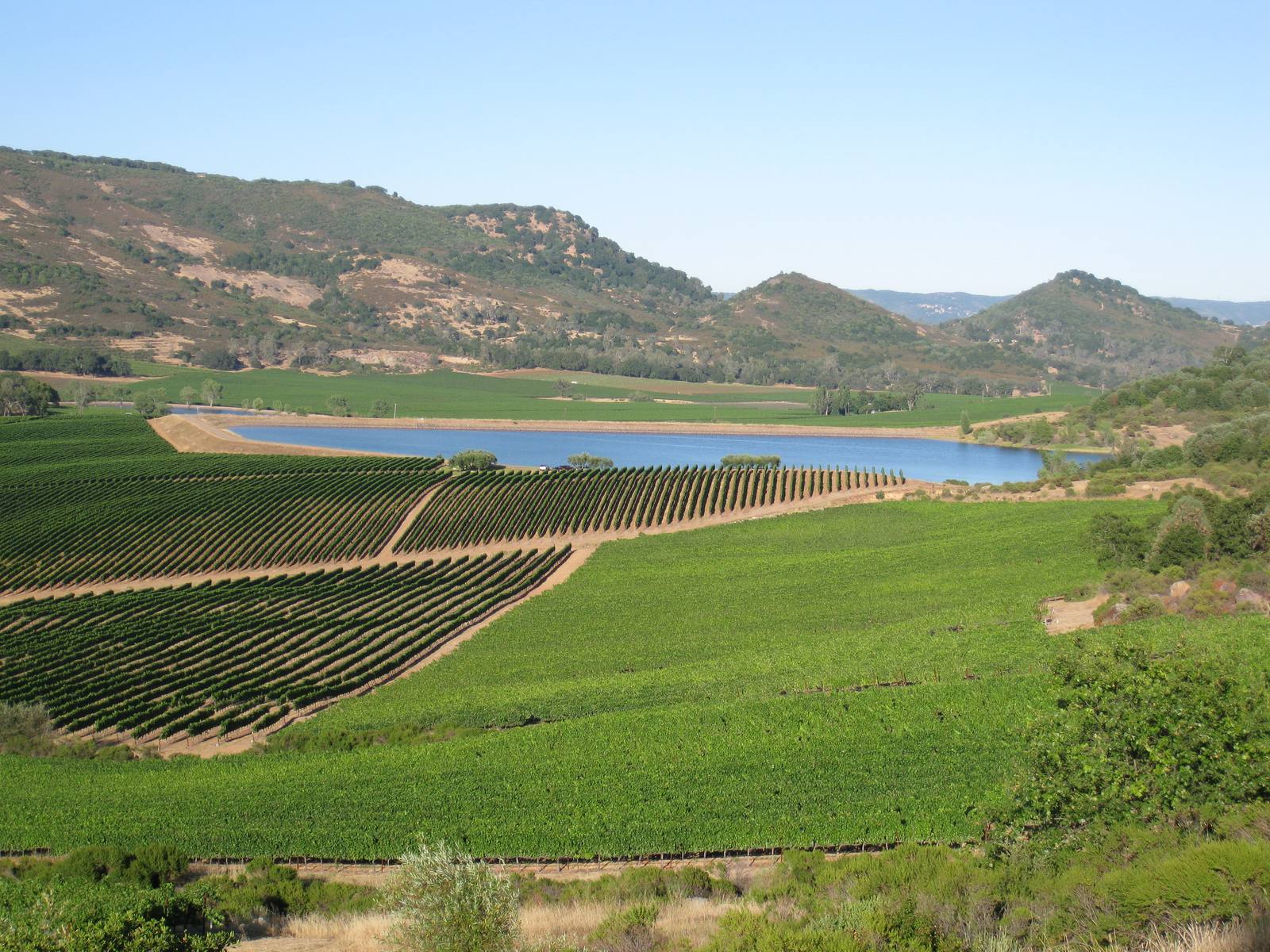
Those numbers land differently in Napa. A Wine Business Journal study of Napa County appraisals found vineyard land averaging $145,683 an acre for larger parcels of 40 to 100 acres, and $632,598 an acre for small parcels of one to 10 acres. The county’s 2024 crop report counted 45,967 bearing acres of wine grapes worth $1.03 billion, with cabernet sauvignon averaging $9,146 a ton, and state crush data put Napa County’s average grape price at the top in California. Tying up land at Napa values for five years or more, on a crop with no contracted buyer, is a proposition few balance sheets here can carry.
Different water, different pressure
Water, the pressure behind the valley plantings, also works differently here. Under the state’s Sustainable Groundwater Management Act, pumping limits in the San Joaquin Valley are forcing growers to fallow land. Woolf told the Associated Press in 2023 that water limits would leave him able to farm only about 60 percent of his land in 20 years, and that his agave got by on as little as three inches of water a year.
Napa County’s groundwater program arrives as a bill, not a fallowing order. The county Groundwater Sustainability Agency’s fee for the 2026-27 fiscal year totals $44.44 per planted acre for growers who irrigate with groundwater, after county contributions cut the first-year rates by about 55 percent from the maximum authorized level, according to the county. It is one more cost in a downturn, but it does not idle land the way pumping caps idle Woolf’s.
What Napa growers are doing instead
Statewide, growers removed about 37,000 acres of wine grapes in 2024 and about 40,000 acres after the 2024 harvest, and Allied Grape Growers said in February that the state was on track to remove at least another 40,000 acres this year. Napa’s version of the contraction looks different: about 20 percent of the county’s vineyard acres went unharvested in 2025, and another 8 percent were removed, according to Allied figures reported by Wine-Searcher.
Ted Hall, owner of Long Meadow Ranch, has argued in a published analysis that most of Napa’s smallest vineyards are no longer economically viable. Farming a 100-acre ranch runs about $13,400 an acre at current costs, Hall wrote, a 10-acre block about $14,400, and the smallest hillside sites more than $23,000. Minimal farming to keep a vineyard alive runs $5,000 to $7,000 a year, and a state law allows the county to fine owners of abandoned vineyards, which can harbor vine pests. Removal, by contrast, costs $5,500 to $9,000 an acre on the valley floor and up to $11,000 on steep ground, a one-time expense.
The honest answer is a grazing lease, a conservation easement, pollinator habitat, or simply land that serves the family rather than the market.Ted Hall, in his analysis of Napa’s small vineyards
The experiment one county north
The nearest agave planting by a wine grower sits one county north. Joy Merrilees, vice president of operations and business development at Shannon Family of Wines, runs Castilleja Farms in Kelseyville, in Lake County, with her husband, and has planted a half acre of agave alongside the farm’s 35-acre vineyard, the Sacramento Bee reported. The product it will yield, called High Chaparral Agave Spirit, is expected to be ready in two to three years. A half acre is an experiment, not a pivot, and no commercial agave planting in Napa County has surfaced in the industry’s reporting on the trend.
I think being creative and getting innovative is really important for farmers to, kind of, stay in the black.Joy Merrilees, to the Sacramento Bee
Napa’s agave is in the distillery
Napa’s one established seat in the new category is a distillery, not a farm. Jano Spirits, founded by distillers who met while working in Napa Valley, makes agave spirits at a distillery in Napa from California-grown Agave americana, cooking the plants in a wood-fired stone pit, according to the company and the Sacramento News & Review. Co-founder Gian Nelson told Bloomberg the makers are treating the category as new ground.
We’re not tied to any tradition, we’re not really tied to any way of making it.Gian Nelson, co-founder of Jano Spirits, to Bloomberg
Whatever California producers bottle, it cannot be called tequila or mezcal: those names are protected by denomination-of-origin rules that reserve them for Mexico, Bloomberg reported. Until a distillery starts handing out planting contracts, Napa’s answer to the slump is likely to remain the one already under way: fewer harvested acres, some vineyards pulled or idled, and some of the most expensive vineyard land in the country waiting for the wine market to come back.
None to date. The Tribune corrects errors promptly and transparently. Read our corrections policy.